

Tooth Sensitivity: Causes, Treatments, and How to Prevent It
Cold water, sweets, or even a deep breath can make a sensitive tooth hard to ignore. This article covers the common reasons sensitivity happens and when it deserves more than a desensitizing toothpaste.
Sensitivity is often caused by exposed dentin, worn enamel, gum recession, a cavity, or a cracked tooth. The key is figuring out whether it is minor irritation or...
Sensitivity is one of those symptoms that can come from several very different problems. The point of the visit is not just to dull the feeling. It is to find the reason behind it.
Tooth sensitivity can be mild and annoying or sharp enough to make you stop mid-bite. The reason it happens is that the tooth is reacting to a trigger, usually temperature, sweets, air, or pressure. What matters most is understanding why that reaction started. Sensitivity is a symptom, not a final diagnosis.
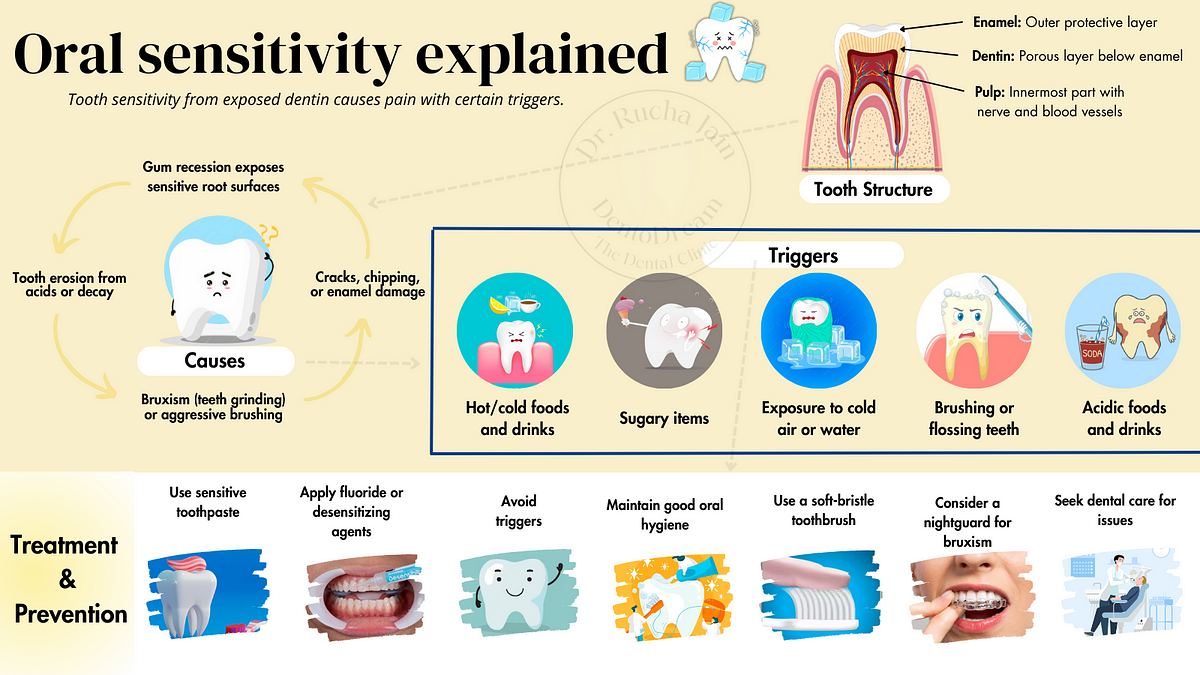
Common triggers patients notice first
Cold drinks are the most common complaint, but hot foods, sweets, brushing, and breathing in cold air can all trigger sensitivity. Some people only notice it in one tooth. Others feel it in several areas, which can point more toward enamel wear, recession, or grinding than a single cavity.
What usually causes tooth sensitivity
- Enamel wear from grinding or acidic foods and drinks
- Gum recession that exposes the root surface
- A cavity or failing filling
- A cracked tooth
- Recent whitening or dental treatment
When it may be more than minor sensitivity
Short bursts of cold sensitivity are common. Lingering pain, pressure pain, or sensitivity that is getting stronger over time is more concerning. That can point to decay, a crack, or nerve irritation that should be checked. In some cases, what starts as “sensitivity” turns out to be a tooth that needs a filling or even a root canal.
How dentists usually treat it
Treatment depends on the cause. The solution may be desensitizing products, a change in home care, a filling, a bite adjustment, or protecting the tooth with a restoration. The point of the appointment is to identify which problem is actually driving the symptom so treatment is not just guesswork.
How to reduce sensitivity at home
Use a soft brush, avoid aggressive scrubbing, and pay attention to foods or drinks that seem to trigger the problem. If grinding is part of the issue, it may also be worth talking about a protective appliance. But if the sensitivity keeps coming back, it is smarter to schedule an exam instead of only trying to manage it at home.
Tired of avoiding cold drinks or certain foods?
We can check whether the sensitivity is from wear, recession, decay, or something deeper and help you fix the actual cause.
Talk with our team if you want help choosing the right next step before you book.
Z Family Dental in Sarasota, with easy booking and a team that will explain things clearly.
Use online booking when you already know you want to come in and want the fastest path forward.