

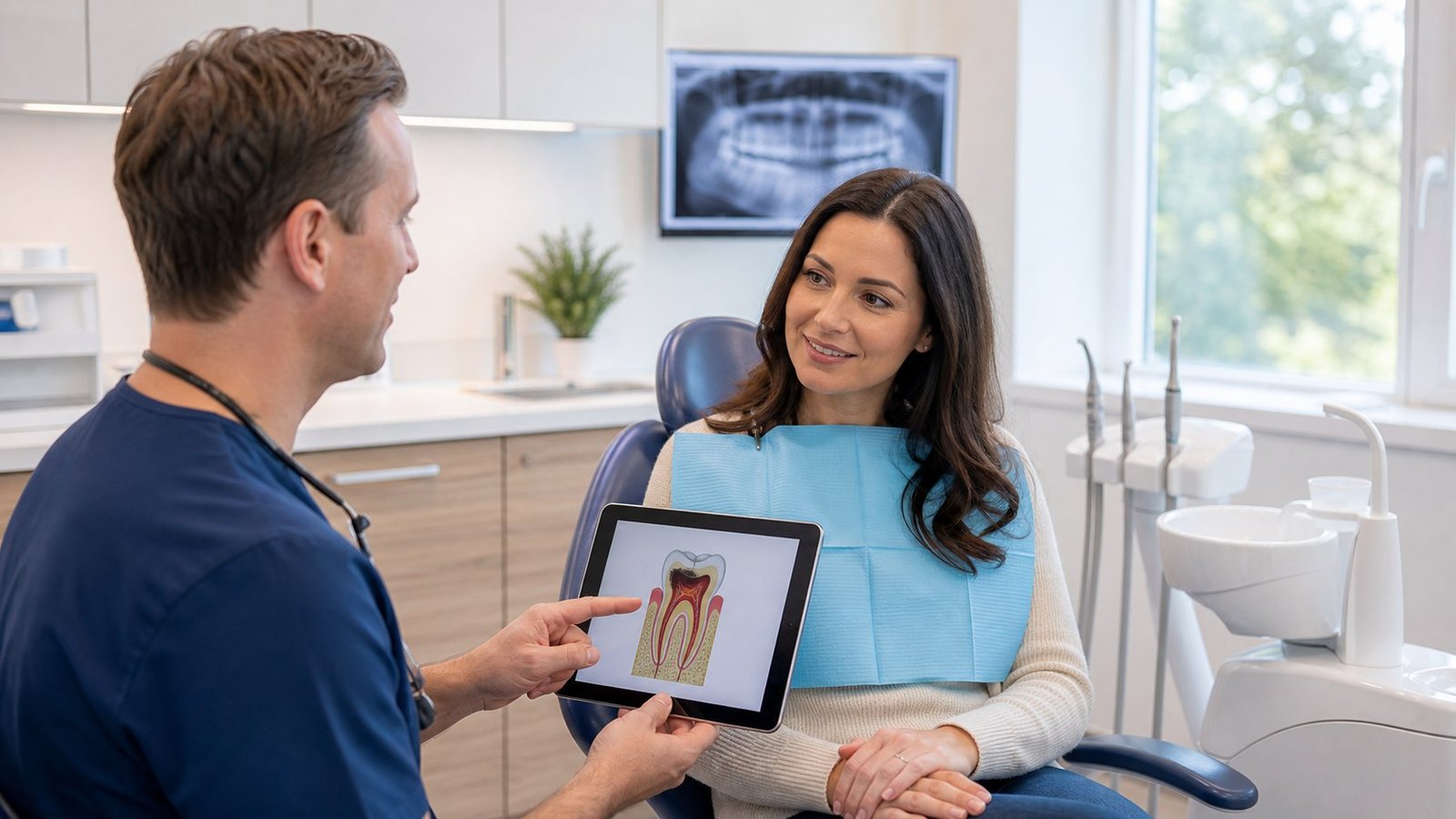
Root Canal Treatment: What Actually Happens During the Visit?
Root canal therapy has a reputation it does not fully deserve. Most patients are not scared because they understand it. They are scared because it sounds mysterious. This guide explains what the visit is for and what the dentist is trying to accomplish.
Root canal treatment is easier to understand when you know the purpose: remove infected tissue inside the tooth, clean the canals, seal the space, and protect the tooth...
No drama, no scare tactics. Just the plain-English version of why root canals are recommended and what the appointment usually involves.
Root canal treatment is meant to save a tooth that has a problem inside it. That inside space can become inflamed or infected because of a deep cavity, crack, old filling, trauma, or a tooth that has been painful for too long. The treatment removes the damaged tissue inside the canals and seals the space so the tooth can be restored.
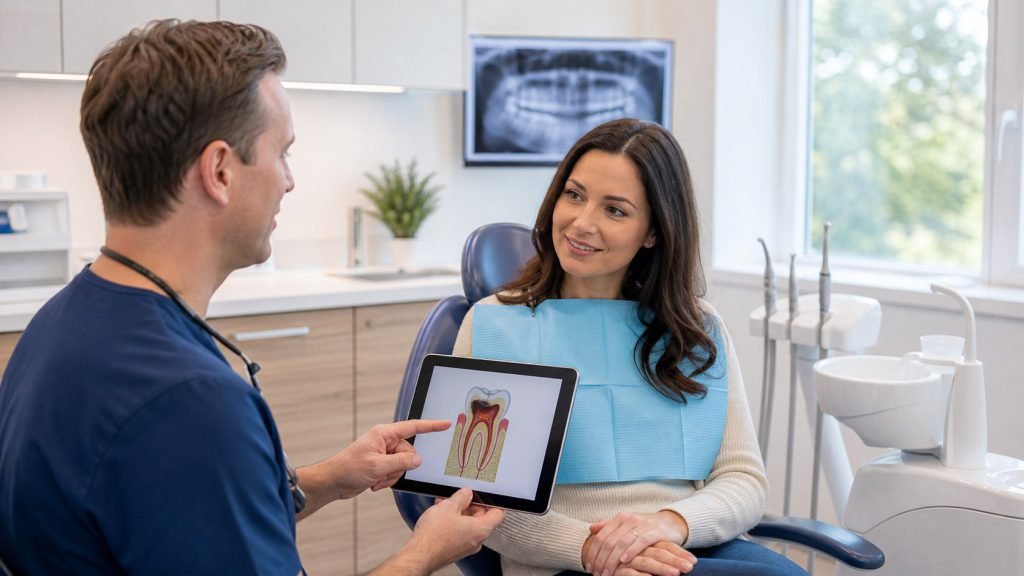
Why a root canal is recommended
The tooth has layers. The hard outside protects the softer nerve and blood-vessel space inside. When bacteria or inflammation reaches that inner space, a filling alone usually cannot solve the problem. A root canal treats the inside of the tooth while keeping the tooth itself.
Heat, cold, biting, or spontaneous throbbing can point to nerve involvement.
The canals are cleaned, shaped, disinfected, and filled to close the space.
Many teeth need a crown afterward so the tooth is stronger under chewing.
What happens during the appointment
The tooth is numbed, the dentist creates access into the tooth, and the canal space is cleaned and shaped. The goal is to remove infected or inflamed tissue and create a seal. In some cases the treatment is completed in one visit. In others, a second visit or specialist referral may make more sense.
What a root canal does not do
It does not make a weak tooth strong by itself. If the tooth lost a lot of structure, it may still need a build-up and crown. It also does not fix a tooth that is cracked in a hopeless way. That is why the diagnosis matters before deciding between root canal therapy and extraction.
Simple way to think about it: root canal treatment handles the inside infection or inflammation. The final restoration protects the outside of the tooth.
When to call sooner
Call if pain is getting worse, swelling is present, you cannot bite on the tooth, or the tooth has a pimple-like bump on the gum. Those signs can mean the tooth needs urgent diagnosis instead of waiting for a routine visit.
Root canal treatment: common questions
Why would I need a root canal?
A root canal is usually recommended when the nerve space inside the tooth is infected, inflamed, or no longer able to heal normally.
Does a root canal remove the tooth?
No. The goal is to clean and seal the inside of the tooth so the tooth can stay in place when it is still restorable.
Will I need a crown afterward?
Many back teeth need crown protection after root canal therapy, especially if the tooth had a large cavity, fracture, or old filling.
Want the fastest next step?
You do not need to know the exact treatment before you book. Tell us what changed, and we will help you start with the right kind of visit.
Talk with our team if you want help choosing the right next step before you book.
Z Family Dental in Sarasota, with easy booking and a team that will explain things clearly.
Use online booking when you already know you want to come in and want the fastest path forward.