

Dental Bridge vs Implant: Which Missing Tooth Option Fits Better?
When one tooth is missing, patients often hear two common options: a bridge or an implant. Both can work well. The better fit depends on the teeth next to the space, bone support, timing, budget, and how much you want to avoid reshaping nearby teeth.
Bridges and implants can both replace a missing tooth, but they use different support systems. This guide explains how patients usually compare them.
This is a high-value decision because the choice affects chewing, cleaning, long-term maintenance, and future treatment. The goal is clarity, not pressure.
Dental bridge vs implant is a comparison worth discussing before replacing a missing tooth.
A bridge and an implant both replace a missing tooth, but they solve the problem in different ways. A bridge uses the neighboring teeth for support. An implant uses a titanium implant in the bone to support a crown without attaching to the teeth beside it.
How a bridge works
A traditional bridge is usually made of crowns connected together. The teeth on each side of the missing tooth are shaped, and the bridge fills the space between them. A bridge can be a strong option when those teeth already need crowns or have large existing restorations.
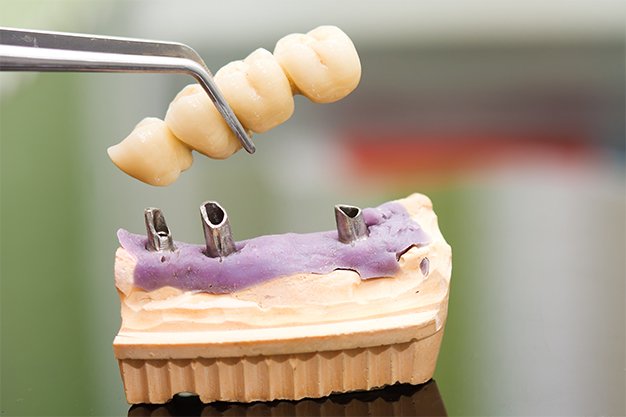
Can be efficient when adjacent teeth already need crowns, but it requires those teeth to carry the replacement.
Does not require crowning the neighboring teeth, but it usually takes more planning and healing time.
How an implant works
A dental implant is placed in the bone where the tooth is missing. After healing, a custom abutment and crown are attached. Implants are often attractive when the neighboring teeth are healthy and you want a standalone replacement.
Cost is not just the sticker price
A bridge may look simpler up front, but it involves the teeth beside the gap. An implant may cost more initially, but it avoids cutting down healthy neighboring teeth. The right comparison should include long-term maintenance, cleanability, and what each option does to the surrounding teeth.
When the decision needs a scan
For implants, bone height, bone width, sinus position, nerve location, and gum health all matter. That is why CBCT imaging may be recommended before quoting the full implant plan. For bridges, the health and strength of the supporting teeth matter most.
Dental bridge vs implant: common questions
Is a bridge faster than an implant?
Often yes. A bridge may be completed faster because it does not require implant healing time, but it depends on the case.
Does a bridge damage the teeth next to the space?
A traditional bridge usually requires reshaping the neighboring teeth for crowns, which is one reason implants may be preferred when those teeth are healthy.
Is an implant always better than a bridge?
No. Implants can be excellent, but a bridge may be a better fit when timing, anatomy, cost, or neighboring tooth needs point that way.
Want help choosing the right next step?
You do not need to know the exact treatment before you call. We can start with the problem, explain what the exam is meant to answer, and help you compare the next steps clearly.
Talk with our team if you want help choosing the right next step before you book.
Z Family Dental in Sarasota, with easy booking and a team that will explain things clearly.
Use online booking when you already know you want to come in and want the fastest path forward.