

Crown Fell Off? 7 Essential Answers Before Your Visit
If your crown fell off, save it and call the dentist. Learn when it may be recemented, what can change the repair plan, and how to protect the...
If your crown fell off, save it and call the dentist. Learn when it may be recemented, what can change the repair plan, and how to protect the...
If your crown fell off, save it and call the dentist. Learn when it may be recemented, what can change the repair plan, and how to protect the...
If your crown fell off, it may be possible to put it back on—but the tooth and crown need to be checked first. Not every dental emergency starts with severe swelling or dramatic pain. Sometimes it starts when you bite down and feel a crack, when a crown comes loose during dinner, or when a filling falls out and the tooth suddenly feels exposed. Those situations can go from manageable to miserable fast, especially if you keep chewing on them.
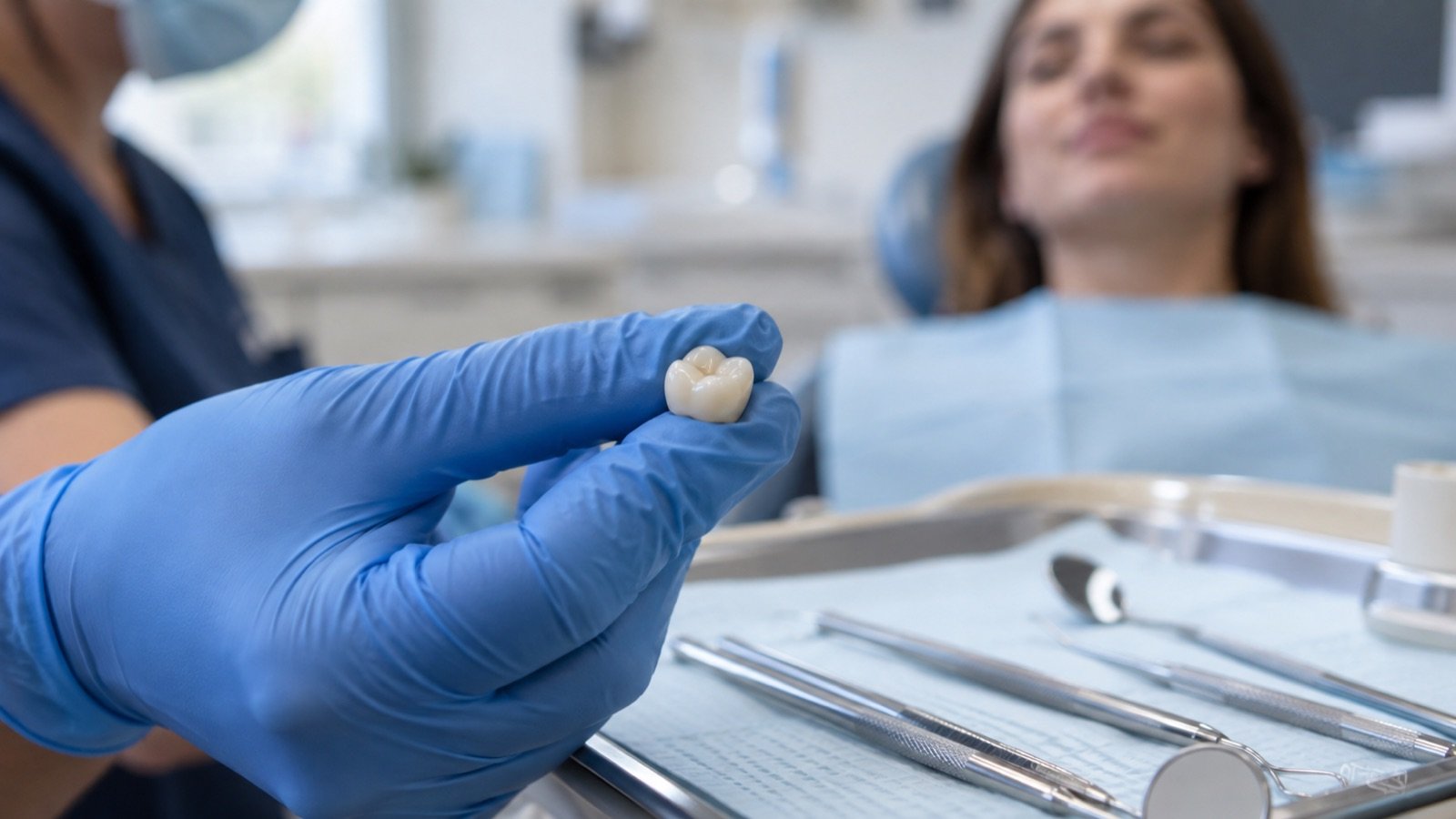
1. Crown fell off: can it be put back on?
Sometimes a sound crown still fits a healthy, restorable tooth and can be recemented. In other situations, the crown is damaged or the tooth underneath has changed. A broken piece inside the crown, new decay, or a poor fit can change the recommendation.
If your crown fell off, bring it rather than deciding at home whether it looks usable. Tell us how it came off, whether it has happened before, and whether you feel pain when biting. Those details help focus the assessment.
The decision is about both parts of the restoration: the crown you bring in and the tooth it covered. Ask the dentist to explain what makes the existing crown reusable, or what prevents it from being reused. It helps to separate the immediate goal of protecting the tooth from the longer-term goal of a comfortable, reliable restoration.
If your crown fell off while eating, make a note of what happened. If your crown fell off during flossing or has felt loose for a while, mention that too. You do not need to diagnose the cause yourself; a clear timeline is useful information for the appointment.
2. What to save and what to avoid
If a crown, filling, or broken piece comes out, keep it and bring it with you. Rinse your mouth gently and avoid chewing on that side. If the tooth is sharp, cover the edge with dental wax if you have it. Try not to test it over and over with your tongue or keep biting on it to see if it is still loose.
Put the crown somewhere you can find it easily before leaving for the office. Tell the team if you cannot find it or if a piece seems to be missing. Bring any pieces you saved, even if you are unsure whether they belong to the crown or the tooth. Let the dentist decide what is relevant.
When you call, explain which side of your mouth is affected and whether the crown was temporary or permanent, if you know. If another office placed it, the approximate date and that office’s name may help with discussing previous treatment. Do not delay calling just because you do not have every detail.
3. When the problem becomes same-day urgent
Call the same day if the tooth is painful, sensitive to air, bleeding, visibly cracked, or you can feel the crown moving around. A loose restoration can expose the tooth underneath and make the next few days much worse if it stays open.
Tell the office what has changed since the crown came off: discomfort at rest, pain when biting, sensitivity, or a rough edge. Be specific about when symptoms started and whether they are getting worse. Also mention any swelling or fever rather than assuming that the missing crown explains everything.
If your crown fell off without pain, ask how soon the team wants to see you and what to do while waiting. The absence of pain alone does not tell you whether the crown can simply be put back on. The examination is what guides that decision. Follow the instructions given for your situation.
4. What we may do at the visit
If your crown fell off, the goal of the visit is usually not just to “put it back on.” We first need to see whether the tooth underneath is still sound, whether decay or fracture is part of the problem, and whether the bite needs to be adjusted. Depending on what we find, the next step may be a simple re-cement, a new crown, a filling, a build-up, or a larger repair.
Before treatment begins, ask the dentist to describe the findings in plain language. Useful questions include: Is the existing crown intact? Is the remaining tooth restorable? Is the proposed repair temporary or intended to be the final restoration? What would make the plan change?
It is also reasonable to ask about the order of treatment and whether another visit will be needed. A visit to assess a tooth after its crown fell off does not guarantee that every part of the repair can be completed that day. Understanding the next step helps you plan work, transportation, and follow-up care.
5. Should I try to put the crown back myself?
Do not use household glue or force a crown into position. Call for advice before using a temporary dental product. A crown that does not fit securely can create another problem, and a home repair cannot show whether decay or a fracture is underneath.
Save the crown in a container and avoid hard or sticky foods on that side. If there is swelling, worsening pain, fever, or a recent injury, tell the office. Trouble breathing or swallowing needs emergency medical attention.
A product sold for temporary dental use is not the same as household glue, but that does not mean it is suitable for every situation. Describe the problem to the dental team before trying a product. If you have already used something after your crown fell off, tell the dentist its name and when you applied it.
6. When this points to a bigger treatment conversation
A crown that keeps coming loose, a tooth that broke close to the gumline, or a large missing filling can sometimes be a sign that the tooth needs more than a quick patch. That does not automatically mean extraction, but it does mean the evaluation matters. The earlier you know the plan, the easier it is to make a good decision.
If your crown fell off more than once, ask what the examination suggests about the reason it keeps happening. Share the history of earlier repairs, including roughly when they were done. Ask what the proposed treatment is intended to address and what follow-up is recommended. These questions make the conversation more useful than focusing only on getting the crown back in place.
7. What determines the repair cost?
If your crown fell off, a recementation and a replacement crown are different procedures. The estimate depends on what remains usable and whether the tooth also needs a build-up or other care. Ask for the options and an itemized estimate after the examination instead of assuming every lost crown needs replacing.
Ask the office to distinguish the examination fee from the cost of any treatment. If more than one option is appropriate, request an explanation of the expected steps and costs for each. If you use dental benefits, ask the team what information is available about coverage and your estimated portion; a treatment recommendation and an insurance estimate answer different questions.
When your crown fell off, the first question may have been whether you need a whole new crown. The assessment helps answer that. Before leaving, make sure you understand what was done, whether it is temporary, how to care for the area, and when to contact the office again.
Further reading: NHS: Dental Treatments.
Crown fell off in Sarasota?
We can tell you whether it looks like a same-day problem, how to protect it before you get here, and what the likely repair path looks like.
Crown fell off: quick questions patients ask
Can a crown that fell off be put back on?
Sometimes. The dentist checks the fit, the condition of the crown, and the tooth underneath. Decay, fracture, or a damaged crown may mean a different repair is needed.
What should I do with the crown?
Keep it in a safe container and bring it to the appointment. Avoid chewing on the exposed tooth and contact the office for advice.
Can I use superglue to put my crown back?
No. Do not use household glue or force the crown onto the tooth. Ask the dental team whether a temporary dental product is appropriate before attempting a temporary repair.
Is it urgent if there is no pain?
Call even if it does not hurt. A missing crown leaves the tooth unprotected, and a loose crown can come off unexpectedly. The office can help determine the timing of your visit.
Why does my crown keep coming loose?
Possible reasons include problems with the fit, the bite, or the underlying tooth. Repeatedly recementing it without checking the cause may not solve the problem.
How much does it cost to fix a crown that fell off?
The cost depends on whether the existing crown can be recemented or the tooth needs a new restoration or other treatment. Ask for an estimate after the tooth and crown are assessed.
Talk with our team if you want help choosing the right next step before you book.
Z Family Dental in Sarasota, with easy booking and a team that will explain things clearly.
Use online booking when you already know you want to come in and want the fastest path forward.