

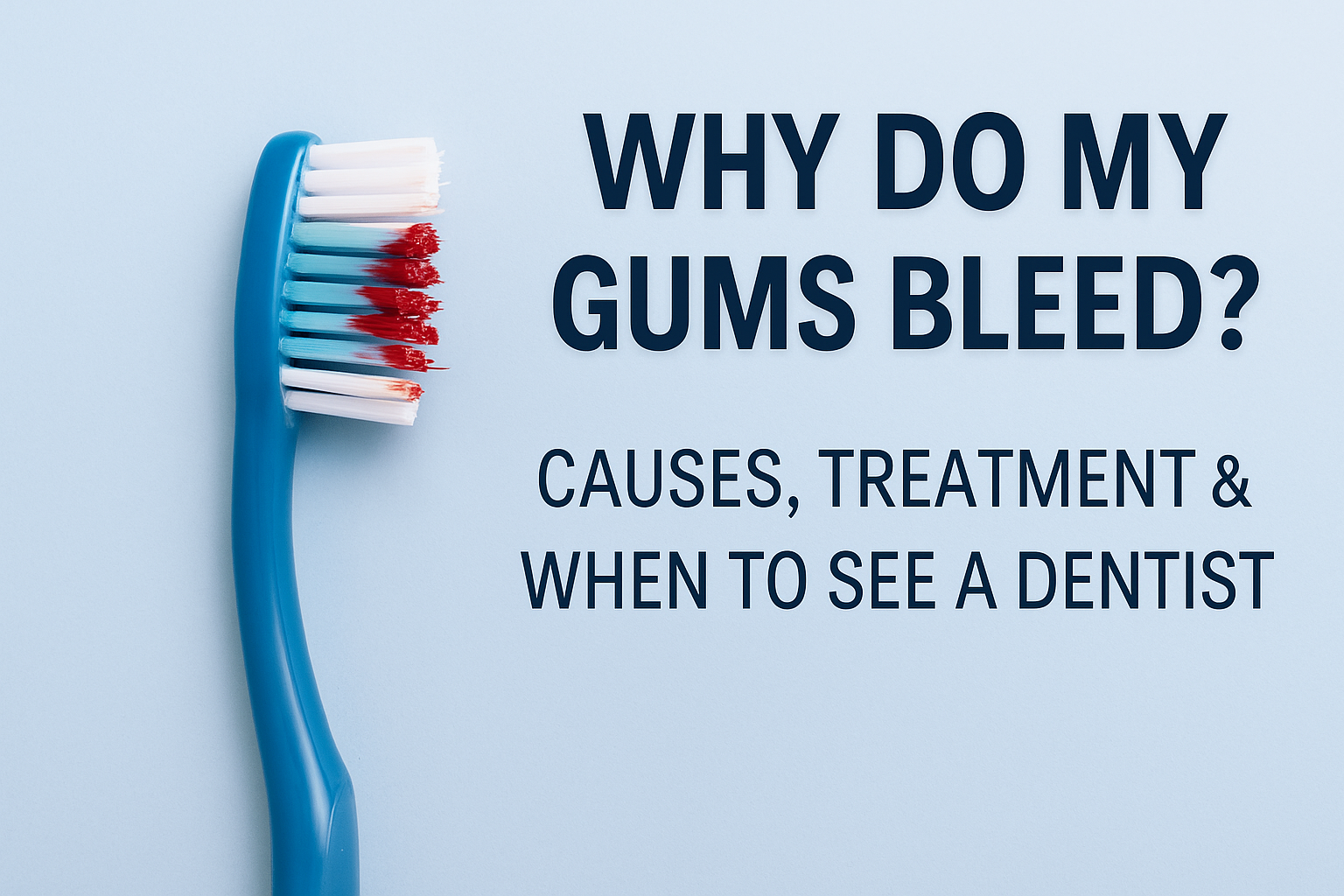
Why Are My Gums Bleeding? 6 Common Reasons to Pay Attention
If your gums bleed when you brush, floss, or eat something crunchy, it is worth paying attention. This article covers the everyday causes people run into most often and when bleeding should move from “watch it” to “schedule a visit.”
Bleeding when you brush or floss is common, but it is not something gums are supposed to do. The cause can be simple or it can be the...
This article is the quick symptom guide. If you already know gum disease or deep cleanings may be part of the conversation, our longer treatment-focused article goes into that in more detail.
Why are my gums bleeding? The answer depends on the cause and the condition of your gums.
Many people assume bleeding gums mean they brushed too hard. Sometimes that is part of it, but gums that bleed regularly are usually telling you something. The issue can be mild irritation, plaque buildup at the gumline, or the early stage of gum disease. Either way, healthy gums are generally not supposed to bleed every day.
Common reasons gums start bleeding
- Plaque and tartar buildup along the gumline
- Inconsistent flossing followed by irritated gums
- Brushing too hard or using the wrong technique
- Inflamed gums from gingivitis
- Dry mouth or mouth breathing that leaves tissues irritated
- Existing gum disease that is getting more active
When it is more than just brushing too hard
If your gums look puffy, feel sore, or bleed even with gentle brushing, that is usually a clue that inflammation is part of the problem. Bleeding paired with bad breath, tenderness, gum recession, or a bad taste in the mouth should not be brushed off. Those details matter because they help separate simple irritation from a condition that needs treatment.
What to do this week
Keep brushing gently, but do not stop cleaning the area. If plaque is the problem, avoiding the gums usually makes the inflammation worse. Use a soft-bristled toothbrush, floss carefully, and schedule a cleaning or exam if the bleeding is not settling down. If you think the issue may already be beyond a routine cleaning, our more detailed article on what happens at a first visit and our deeper guide to next steps can help you prepare.
What a dentist usually checks
Your dentist will look at how inflamed the gums are, whether there is tartar below the gumline, whether pockets are forming around the teeth, and whether the problem seems isolated or more widespread. If the conversation starts moving toward periodontal treatment, the longer article on cleanings and gum care and our companion piece on cost planning are good next reads.
Why catching gum problems early matters
Gum problems are usually easier to control when they are caught early. The goal is to calm the inflammation, protect the bone around the teeth, and keep a mild issue from turning into a bigger one. If the bleeding keeps showing up, it is worth letting a dentist look at it sooner instead of hoping it disappears on its own.
Want to find out why your gums are bleeding?
We can look at the gums, explain whether the issue seems mild or more advanced, and tell you clearly what the next step should be.
Talk with our team if you want help choosing the right next step before you book.
Z Family Dental in Sarasota, with easy booking and a team that will explain things clearly.
Use online booking when you already know you want to come in and want the fastest path forward.