Root canal therapy in Sarasota for severe tooth pain, infection, and abscess-related pressure when the goal is saving the tooth. Call 941-899-0260.
Save the tooth when possible
When pain, pressure, or infection is coming from inside the tooth, the next step is usually clarity, not panic
Most patients land on this page because the pain is getting worse, the tooth suddenly hurts to bite on, or an abscess conversation has started. A root canal is not about “doing something dramatic.” It is usually the procedure that removes infection from inside the tooth so the tooth can stay in place instead of coming out.
Severe tooth painAbscess and pressureSave the tooth when possibleFinance and savings options available
When root canal usually comes up
The symptoms that usually lead to a root canal conversation
Patients rarely start by asking for a root canal. They usually start by describing pain, swelling, pressure, or a tooth that suddenly feels very different.
Lingering painPain that keeps hanging on after cold, heat, or chewing is often the first sign the nerve is involved
If the tooth keeps throbbing or stays sore long after a trigger is gone, the problem may be deeper than a routine filling can solve.
Abscess or swellingPressure, swelling, or a bad-tasting drainage point can mean infection has moved beyond the surface
This is where the conversation usually shifts from “watch it” to “treat it now or decide whether the tooth is still worth saving.”
Cracked or damaged toothA deeply cracked tooth or a tooth with a large old filling can sometimes still be saved with endodontic treatment
If the structure is still predictable, a root canal can be the part that removes infection so the tooth can be rebuilt with a crown afterward.
What the root canal process usually looks like from diagnosis to restoration
The first goal is figuring out whether the tooth can still be saved. The second is stopping infection and pain in a way that actually lasts.
1Focused exam and imaging
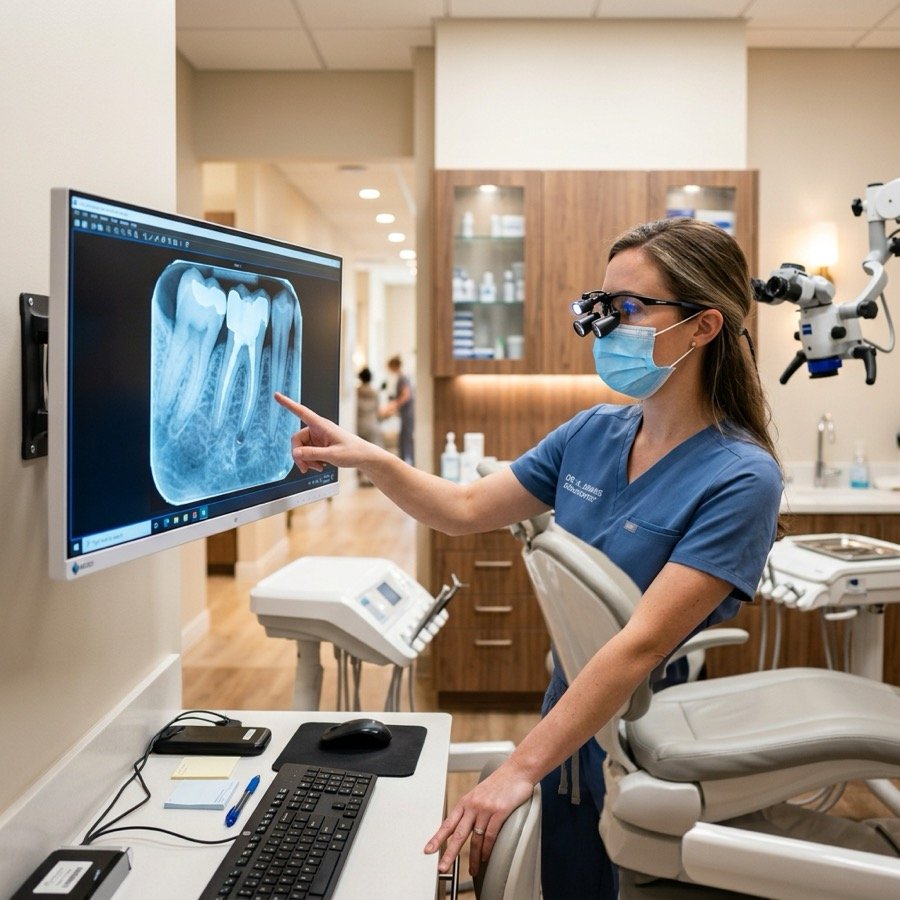
We look at the tooth, the roots, the surrounding bone, and whether the pain is coming from pulp infection, a crack, or a different dental problem.
2Decide whether the tooth is a good save
If the tooth has enough structure and a predictable long-term outlook, root canal therapy is often the stronger choice than extracting it.
3Clean out the infection
The root canal itself removes the infected tissue from inside the tooth and seals the space so bacteria are not left trapped there.
4Protect the tooth afterward
Many root canal teeth still need a crown or another type of restoration afterward so the tooth stays strong under normal bite pressure.
A calmer way to picture itRoot canal care is usually about saving the tooth, not doing something scary
Most patients feel better once the problem is explained clearly. This treatment is usually the step that removes infection from inside the tooth so the tooth can stay in place and stop flaring up.
How we decide the next stepSaving the tooth still depends on whether the structure can hold up afterward
If the tooth is infected but still restorable, root canal plus a crown is often the stronger plan. If the tooth is split or too compromised, extraction may be the better answer. And if the pain started after a recent filling or crown, we re-evaluate first so the nerve is not blamed for the wrong problem.
Helpful next steps
Helpful pages patients usually open next
These links usually answer the next question after a root canal discussion, whether the concern is pain, restoration, or cost.
What patients say
What patients usually want when a tooth suddenly starts hurting badly
People usually want to know whether the tooth can be saved, how fast the pain can be addressed, and what the real next step is.
5.0
171 Google reviews from real patients
Real feedback from our patients, so you can get a feel for what care at Z Family Dental is really like.
★★★★★
I can’t say enough good things about Dr. Z and his dental assistant Sam!
Last night, I cracked my tooth vertically and was in quite a bit of pain. First thing this morning, I called the office hoping they could help. I was told that Dr. Z wasn’t even scheduled to be in that day. I explained what had happened, and Sam told me he would call me back.
Not even five minutes later, I got a call back from Sam with some amazing news: Dr. Z was coming into the office specifically to take care of me!
Dr Z saw me, assessed the situation, and made a 3D crown to fix my tooth—all in the same visit. I was incredibly impressed by his dedication, skill, and willingness to come in on his day off to help a patient in pain.
That level of care and commitment is hard to find. From Sam who took my situation seriously to Dr. Z personally coming in and resolving the problem, the entire experience was exceptional.
If you’re looking for a dentist who truly cares about his patients and goes above and beyond when you need him most, I highly recommend Dr. Z. I’m extremely grateful for everything he did for me!
★★★★★
Very caring honest doctor. Great staff
Questions patients ask
Questions patients usually have
How do I know if I need a root canal?
That depends on whether the nerve inside the tooth is inflamed or infected. Lingering pain, abscesses, severe pressure, and pain with chewing are some of the most common reasons we evaluate for one.
Is a root canal always better than extraction?
Not always. If the tooth can still be restored predictably, saving it is often worth discussing. If the structure is too damaged, extraction may be the more realistic option.
Will I need a crown after a root canal?
Often, yes. Many root canal teeth still need a crown afterward so the tooth stays strong and less likely to fracture under normal chewing pressure.
Can you do a same-day emergency root canal visit?
If availability and the condition of the tooth allow it, we do our best to move quickly, especially when infection or pain is escalating.
What if I have swelling or an abscess?
Call us right away. Swelling and abscess-related pressure are two of the clearest reasons to stop waiting and get the tooth evaluated promptly.
What if I do not have insurance?
We can review financing and our savings plan so treatment decisions are not being made in the dark about cost.